Crusader
- 1 д
- 7 д
- 30 д

Start with the anti-cheat, because Once Human handles enforcement unusually. The publisher leans on server-side analytics and manual review of reports rather than instant client-side reaction, and bans land in waves, often announced alongside patches. Add the seasonal structure: a server runs one scenario for several weeks and then resets, so anything you failed to move into your permanent personal space disappears together with an account that is locked by then.
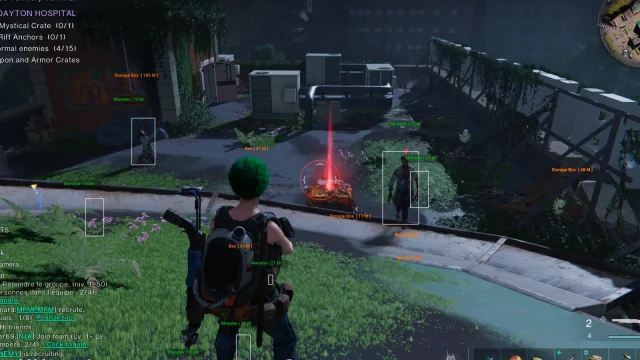
The practical conclusion is to spend risk only where it returns something: the opening days of a scenario, when the entire server races for the same containers, and the PvP scenarios, where another player's territory and what it holds become the objective. So a build here is about information more than shooting. Highlighting crates, rare containers and blueprint points removes the hours of running an empty map. Marking anomalous creatures shows whether a zone is worth approaching with your current gear or better left for later. Combat features stay secondary and mostly matter in PvP: gentle aim support and spread control, without the sharp movements that show up plainly on someone else's recording.
Not instantly. Most of the work happens server-side: abnormal gathering rates, movement and damage statistics, plus manual review of player reports. Decisions therefore arrive in batches and often coincide with major updates. A quiet first week proves nothing about the state of an account.
The server closes the scenario and nearly everything you built or stockpiled stays in that season. Only what the game lets you keep in your permanent personal space carries over. That pushes the value of any build sharply toward the opening of a season, when the resource race is on.
In PvE scenarios, loot vision without question. Searching eats the time, not fighting: containers, blueprints and rare points spread across a large map. Combat features only take priority in PvP scenarios, and even there they are kept gentle because of recordings and reports.
Creature visuals work mainly as a warning system: you can read how dense an anomalous zone is and whether your current gear is enough to enter it. Against large enemies, positioning and timing knowledge is worth more than aim automation, since damage there is capped by gear and build anyway.
Yes, and that is where it returns the most. When another player's territory is the objective, knowing the group size, their positions and what is actually stored inside changes the whole plan. It is also where attention is highest, so loud settings survive there for the shortest time.