LAGSWITCH
- 1 д
- 7 д
- 30 д
- 90 д


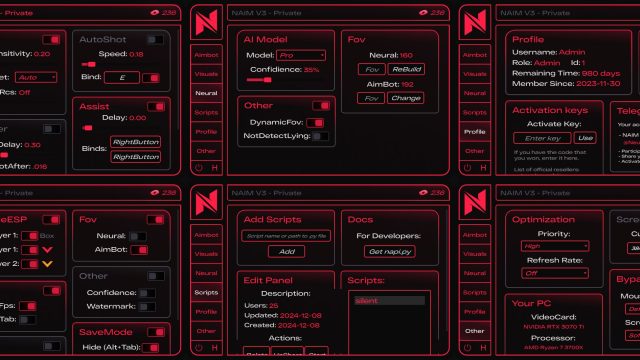
The usual expectation for this section is simple and wrong: that a neural net sees everything and plays the game for you. The truth is closer to the opposite. Recognition works on what is already drawn on your screen, so an enemy behind a wall, inside smoke or off camera does not exist for it. Where a conventional ESP leans on game data, this approach leans on a picture, and the picture ends at the edge of the monitor.
The second misconception grows out of the first: that something this clever needs no tuning. It needs more tuning than usual. Capture zone, target priority, reaction delay, how sharply the aim closes in are all your decisions. Push them too far and a recording looks as unnatural as the bluntest aimbot. Keep them too soft and you feel nothing at all.
What it does offer is independence from a single title. One tool covers a first-person shooter, a battle royale and an extraction game, and you change the profile rather than the product. That matters if you rotate between five games and would rather not keep five subscriptions.
The limits deserve stating plainly. It does not count round economy, does not remember where someone stood a minute ago, and gives no timings. It helps you finish the aim; reading the match is still your job.
By where the data comes from. Classic features rely on what the game client already knows, which is why they can display an enemy through an obstacle. Recognition works from the image and knows exactly what you know. That changes the use case: it is help with acquiring and holding a target, not a source of map information.
No, and that is the point of this section. One tool serves several titles, with a profile per game covering capture zone size, how fast the aim closes and which target it prefers. Profiles switch between sessions, so someone playing a shooter on weeknights and a battle royale on weekends gets by with a single subscription.
Recognition consumes part of your compute budget, so headroom helps. If a game already runs at the edge of what your machine can do, frames will drop. A simple benchmark: comfortable use starts where you already hold a high, stable frame rate in the target game. On weaker systems the aiming benefit is eaten by lost smoothness.
No. If an opponent is behind a wall, inside smoke, or simply outside the frame, he does not exist as far as recognition is concerned. That is a property of the approach rather than a shortcoming of a particular build. In games where half the information arrives from cover and the minimap, it works alongside game sense, never instead of it.
With the calmest values available. A small capture zone, a noticeable delay, soft closing speed, and a few matches spent purely getting used to it. After that, change one parameter per session and watch your own recordings. If the crosshair movement looks foreign to you, it looks the same way to anyone else. Sharp settings are what usually gives people away.